
I read a recent Defector article about the resurgence of bookstores with two very different emotions.
The first was joy.
I love books. I love that bookstores are thriving. People are gathering again for author events and book clubs. They’re looking for places where they can browse, discover something unexpected, and spend time with their community.
I wholeheartedly celebrate that.
In fact, just last week, a new bookstore opened here in Columbus. I visited during opening weekend and it was packed. Seeing people excited about having a new place to discover books and gather made the trend in the article feel especially real.
But my heart also aches a little.
I worked for Borders Books and Music during the 1990s and 2000s. My job focused on community engagement and author events—first for one store, then six, then 11, and eventually for all 250+ stores. My coworkers quickly became friends who loved books and music as much as I did. We poured our hearts into celebrating the art and the people who created it.
So much of what bookstores are being celebrated for today is what I loved about our work then. We were already doing it.
We Were Building a Third Place
Borders was always more than a place to buy books and CDs.
We were intentional about making our stores a “third place”: somewhere other than home or work where all kinds of people could feel comfortable spending time.
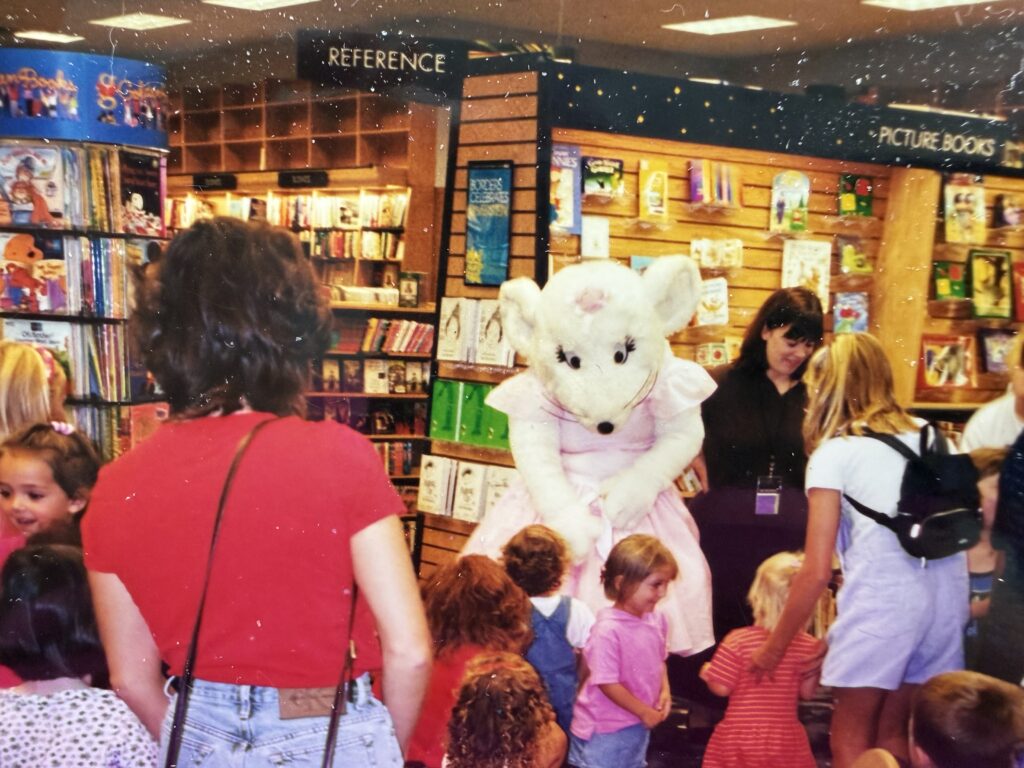
And they did. People browsed the shelves. They met friends for coffee. Some listened to music. Families brought their children for storytime every Saturday. They came to hear authors speak and for Open Mic nights. They wandered in without knowing what they were looking for and sometimes stayed for hours.
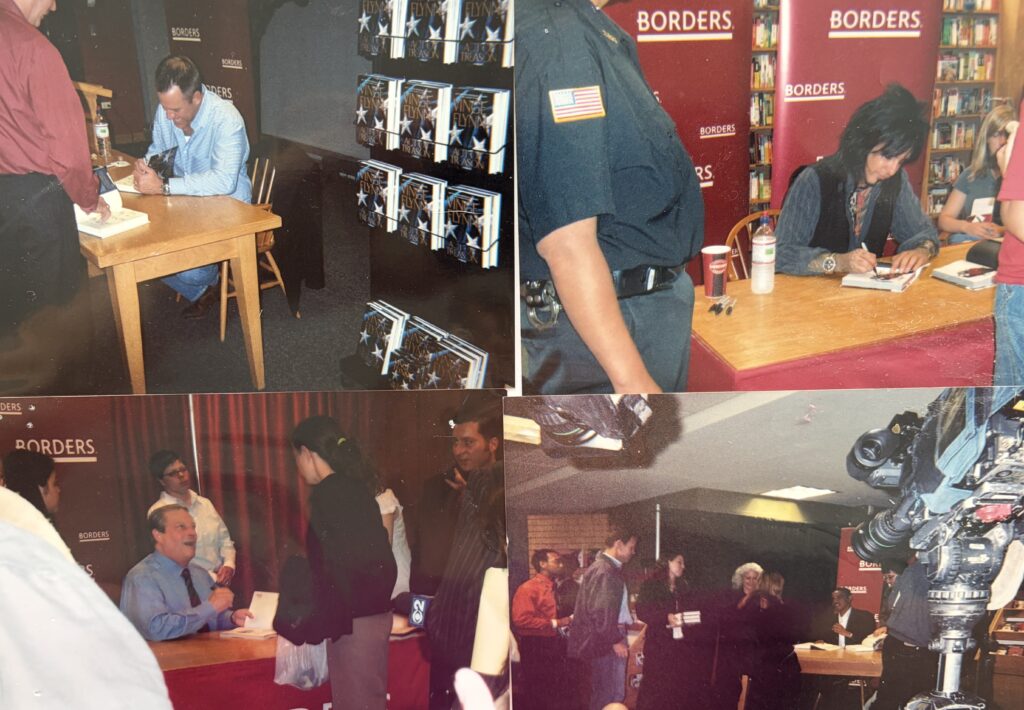
I loved talking about books with readers and writers. I loved treating authors like the rock stars I believed they were. Most of all, I loved watching people create community around books.
A writer who had spent months or years working largely alone could suddenly be in a room full of people who’d read and loved their words. Readers could ask questions and hear the story behind the story. Strangers discovered that someone sitting a few chairs away cared about the same things they did.
Those interactions deepened people’s relationships with authors and their books.
They also deepened their relationship with Borders.
That’s How People Experience a Brand
I’ve spent much of my career since Borders working in brand and communications. Looking back, I realize that my Borders years taught me one of my earliest lessons about what actually builds a brand.
Personal Engagement Matters
A brand can make all kinds of promises through advertising and marketing. People decide what they believe about those promises through experience.
At Borders, those experiences happened every day. We worked hard to place exactly the right book in every customer’s hands. The same was true for employees in the music and video departments. We loved introducing customers to an author or artist they’d never heard before. We also enthusiastically championed our own favorites. I can just imagine the conversations we’d have about Yesteryear if we were still there today!
The Magic of Gathering as a Community
My favorite part of the job was hosting author events that brought hundreds (and sometimes thousands) of people together around a story. There was nothing quite like the energy in the store when a crowd of readers gathered to meet an author they loved. The excitement was contagious. I got to watch books bring people together in real time, and it was exhilarating.
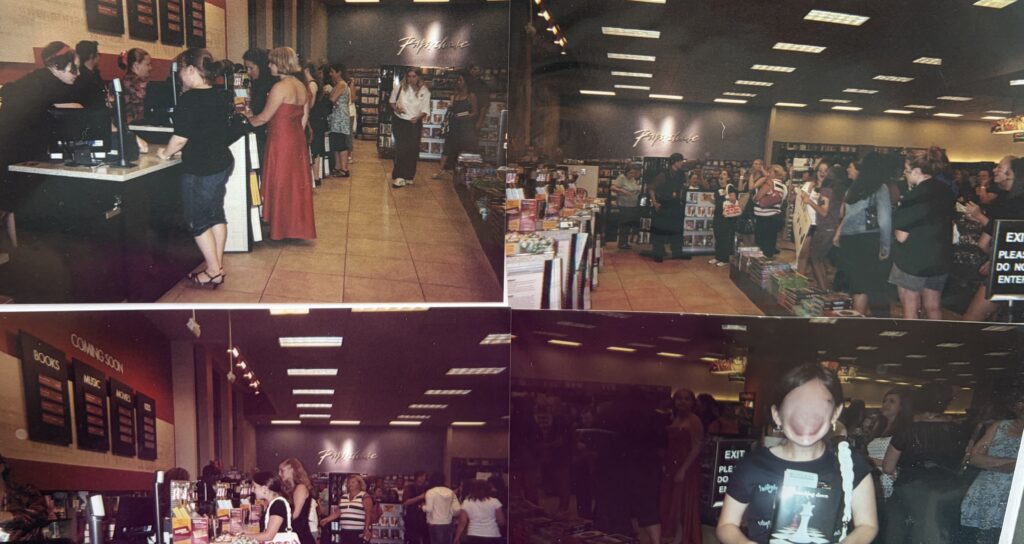
But nothing captured that magic better than our midnight release parties. Hundreds of kids dressed as their favorite characters, would show up absolutely geeking out over the newest Harry Potter or Twilight series book.
They spent hours in the store waiting for midnight. They played games, debated characters and plotlines, and excitedly speculated about what might happen in the new book. For those few hours, the store became a community built around a story everyone loved.
Then midnight finally came. I watched kids sit down right in the middle of the cash wrap aisle and start reading the minute their parents paid for the book and handed it over.
Mind you, it was after midnight. They’d already been at the store for hours. None of that mattered. They needed to know what happened next to Harry, Ron, and Hermione.
That’s what books can do. And that’s what a bookstore can create around them.
They were there because they wanted to experience something with other people who cared about it as much as they did.
Community Engagement is Brand Building
Every event, recommendation and conversation gave someone another reason to think of Borders as their bookstore.
That’s difficult to manufacture through a marketing campaign. It happens when people engage with people.
And the employees creating those experiences aren’t just delivering the brand. They’re helping build it.
Then Digital Changed Bookselling
Of course, the way people bought books was changing dramatically around us. Amazon offered more selection and convenience. E-books made it possible to get a book almost instantly. Online shopping changed people’s expectations around price, inventory and access.
Borders needed to respond. But, we didn’t respond quickly enough or well enough.
There were many reasons Borders ultimately failed. But I still think about the disconnect between what we knew about our customers and the decisions being made about the company’s future.
The digital revolution was pivotal, and our leadership didn’t grasp its significance soon enough.
But digital wasn’t replacing everything we offered. It was changing the transaction. The human need to connect and engage with each other never really disappeared. We just forgot about it for awhile.
What Couldn’t Be Digitized
That’s what makes today’s bookstore resurgence so bittersweet for me.
The Defector article describes bookstores as places for discovery, conversation, and community. And I think that’s at the heart of why bookstores build community so naturally. They give people a physical place to gather around something they already share: a love of books and stories.
I recognize that bookstore immediately.
It’s the bookstores I remember. The bookstores I loved.
An algorithm can recommend a book based on what you’ve already read. A bookseller can talk with you about what you loved about it and send you somewhere completely unexpected.
You can order a book from your couch. You can talk about it on Instagram or TikTok.
But neither is quite the same as sitting in a room with its author and a hundred other people who were moved, challenged or entertained by the same words.
There’s something powerful about sharing physical space with people who care about something you care about.
Convenience matters. So does personal, in-person engagement.
The strongest brands understand the value of both.
What We Knew
There’s another lesson from Borders that has stayed with me.
Thousands of employees were interacting with customers every day. We knew why people came to the stores. We saw what made them stay. We heard what they wanted. We experienced firsthand how much personal interactions mattered.
We also knew the world was changing.
That knowledge existed throughout the organization. But knowing something isn’t enough. Organizational knowledge only has value when it influences what happens next. And in our case, it never did. Whether leadership didn’t hear it, didn’t believe it, or didn’t know what to do with it, I can’t say.
That’s something I think about frequently in the work I do today.
The people closest to your customers often understand things about your brand that can’t be found in a report or dashboard.
Are you listening to them?
I Still Miss Borders
I couldn’t be happier that bookstores are thriving.
I love that people are discovering—or rediscovering—the pleasure of real physical books. I love that authors still have places where they can walk into a room and be treated like rock stars. I love that people are finding community around books.
And I love that bookstores are once again being recognized as valuable third places. How I wish Borders were here to be part of it.
We didn’t need to choose between digital innovation and human connection. We needed to understand how important both would become.
Fifteen years after the last Borders stores closed, I keep coming back to what we already knew.
Customers came in for the books.
But the people, conversations, and experiences were what made Borders a brand they could belong to.
I was lucky enough to have a job that let me help create that. It was the best job ever.
I still miss it.
What Does Your Team Know About Your Brand?
The people closest to your customers often know what creates connection, builds trust, and keeps people coming back. The question is whether that knowledge is shared across your organization and used to make decisions.
I help organizations turn what their people know into a shared understanding of their brand, audiences and value.
Let’s talk about what your organization already knows and how you can put it to work.
