
5 Ways to Improve Nonprofit Internal Communications
Internal communications often falls to the bottom of a nonprofit’s priority list.
There’s always something more urgent. A fundraising campaign needs attention. A program is launching. Leadership needs an announcement distributed. And in many nonprofits, one communications professional is responsible for all of it.
Internal communications may be considered an HR responsibility, something managers should handle, or simply another task no one has time to take on.
But internal communications plays a critical role in how employees understand and experience the organization. And that experience influences the organization’s internal brand.
Your Employees Experience Your Brand Every Day
What if a nonprofit identifies collaboration as a core value, yet employees rarely hear about what other departments are doing? Or they learn about a major organizational decision through a public announcement instead of their manager?
Their everyday experience tells a different story than the one the organization shares externally.
Communications professionals can’t control every leadership decision or aspect of workplace culture. But we can help employees understand organizational priorities, learn about other programs, and see how their work contributes to the mission.
That’s an important part of building shared organizational understanding.
As I explored in a previous blog, employees make decisions about how to represent their organizations every day. Those decisions depend on what they know and understand.
Internal Communications Problems Often Start With Information Gaps
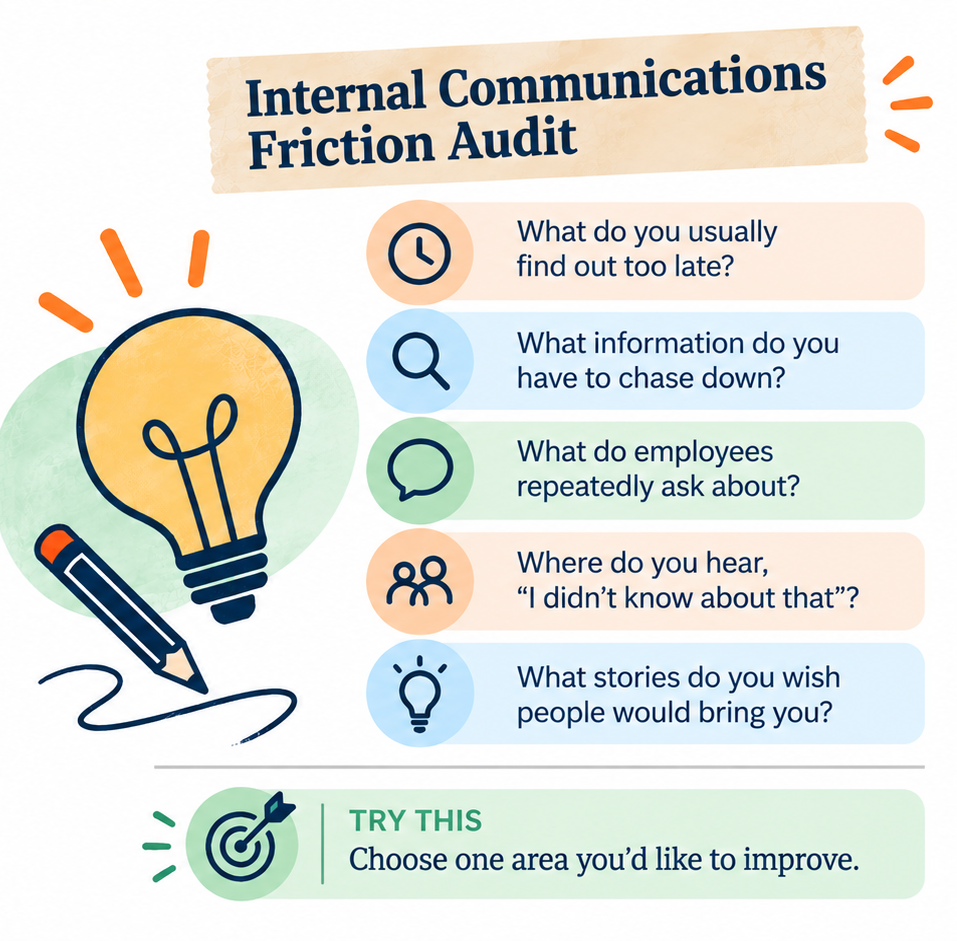
One of the most common frustrations I hear from nonprofit communications professionals is that they don’t receive information consistently or early enough to do something about it. That might mean learning about a leadership change after decisions have already been made. Or missing an everyday story about an employee who went above and beyond for a client.
Employees experience similar challenges. Different departments have different information, and staff may not understand how organizational decisions affect their work.
Sometimes the problem is the communication channel. Sometimes information never reaches the right people. And sometimes employees receive a message but don’t understand what it means.
This connects to something I’ve written about in recent blogs. Organizations have plenty of information. The challenge is making sure people understand it and know how to use it.
Before creating another newsletter or scheduling another meeting, we need to understand where information is getting stuck.
Five Practical Ways to Improve Internal Communications
I recently presented a workshop for nonprofit communications professionals called Internal Communications: Building Your Brand From the Inside Out.
My central message was that we can improve internal communications by applying the same strategies we already use for external audiences.
The presentation explores five practical approaches:
- Include employees in audience planning. Consider what they need to understand and how best to reach them.
- Make information gathering part of existing workflows. Establish reliable ways to collect and share updates across departments.
- Plan internal and external communications together. Include employees in your existing communications calendar.
- Create once and adapt for each audience. Use the information you’re already collecting to help employees understand the organization.
- Check understanding and action. Look beyond email opens and engagement to learn whether employees understand and can use the information.
These strategies can help with major announcements and everyday information sharing. They don’t necessarily require new platforms, additional staff, or a separate communications program.
Start With One Improvement
If your communications workload is already overwhelming, start small.
Identify one recurring problem. Consider where the information flow breaks down and what existing process or tool could help.
A better information handoff, a regular program update, or a simple change to your communications calendar could make a meaningful difference.
Internal communications is one way nonprofits build shared organizational understanding. It’s also part of preserving and sharing the knowledge employees need to do their jobs.
I recently explored that broader challenge in another recent blog.
When employees understand organizational priorities and how their work contributes to the mission, they’re better equipped to work effectively with others. That shared understanding supports a stronger internal brand.
I’ve attached my workshop presentation below, with examples and practical strategies you can adapt for your organization. You’ll also find resources at the end to help you get started.
If your organization is struggling with communication gaps or inconsistent messaging, let’s talk about how I can help.
