
Why the Sector Can’t Solve Tomorrow’s Problems With Yesterday’s Practices
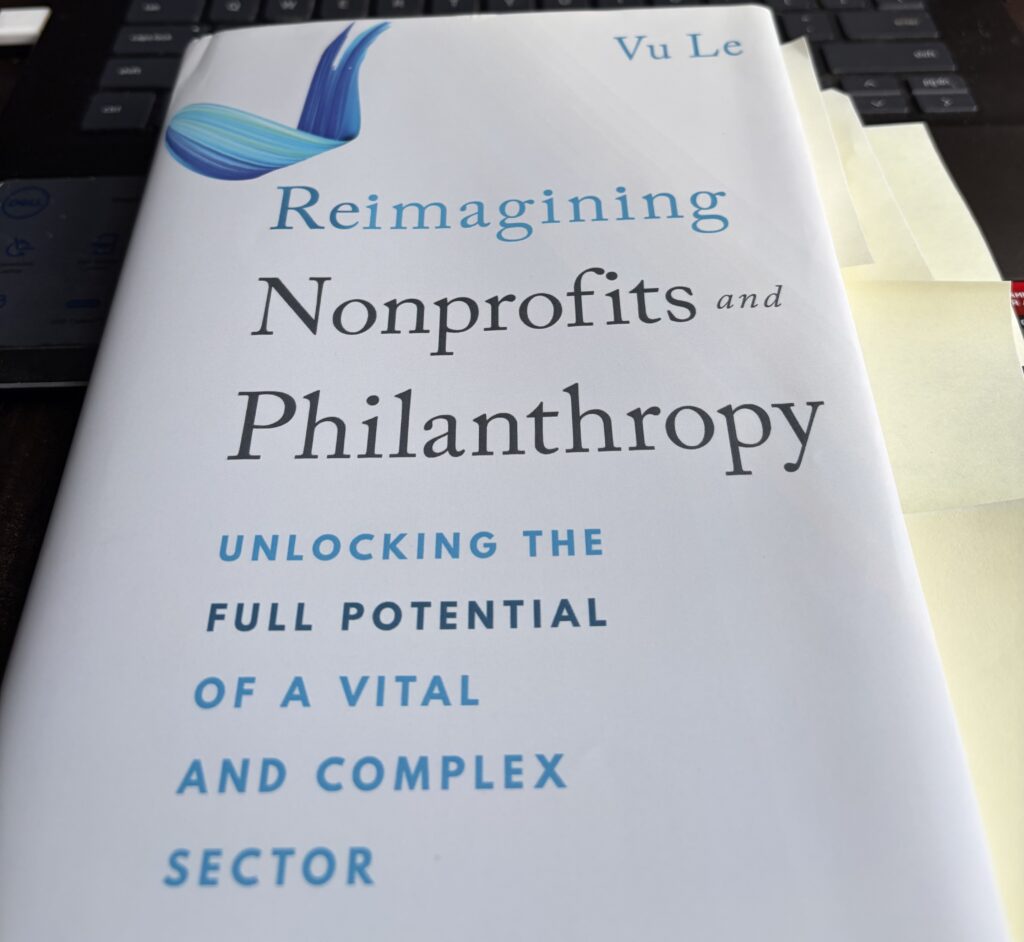
I read Reimagining Nonprofits and Philanthropy by Vu Le last winter, but a conversation this week reminded me just how relevant it is.
I was talking with a colleague about new research projecting the future of human services in Central Ohio.
The findings were sobering. Demand for services is expected to continue growing over the coming decades, driven by population growth, aging, housing pressures, and other demographic shifts. Yet the report makes something equally clear: the social safety net will never catch up if we continue operating the way we always have. Meeting tomorrow’s needs will require not just more funding, but fundamentally different ways of building organizational capacity and supporting the nonprofit sector.
That conversation immediately reminded me of Vu Le’s book. Every once in a while, you read a book that gives language to ideas you’ve been circling for years.
Vu challenges many of the assumptions our sector has accepted for decades. This includes assumptions about fundraising, governance, staffing, and what it means to be “mission-driven.” His central argument is both simple and provocative: many of the practices we consider normal aren’t helping nonprofits fulfill their missions. They’re holding them back.
The theme that resonated with me most was his call to reject the nonprofit sector’s scarcity mindset.
Too often we’ve romanticized doing more with less. We celebrate exhausted staff. We normalize outdated technology. We expect executive directors to perform miracles with inadequate budgets. Accepting the “Other duties as assigned” part of our job description is not a badge of honor.
One quote from the book has stayed with me.
“Our sector needs to reclaim its sense of imagination, hope, and optimism… You deserve a decent chair to sit on—and a thriving wage, and plenty of vacation days, and retirement savings—while you change the world.”
That line about the office chair made me laugh because it’s so true.
Somehow we’ve convinced ourselves that a beat-up office chair, outdated computers, and an understaffed team prove our commitment to the mission. As if discomfort somehow validates impact.
It doesn’t.
A Broken Chair Doesn’t Help Anyone
Neither does an executive director working 70-hour weeks because hiring another staff member feels irresponsible.
Neither does postponing investments in systems, technology, communications, or leadership development because “the money should go to programs.”
If those investments allow an organization to serve twice as many people five years from now, they’re not overhead. They’re investments in organizational capacity.
That’s one of the reasons Vu’s book resonated so strongly with me. It aligns closely with the work I’ve been developing around Shared Organizational Understanding.
When I talk about capacity building, I’m not talking only about adding more people or securing more funding. I’m talking about helping organizations make better decisions because everyone shares the same understanding of who they are, what they stand for, and how they work together.
Capacity Isn’t Only Infrastructure. It’s Also Collective Knowledge
Shared understanding becomes capacity because it reduces friction and silos, helps new employees contribute faster, empowers staff to make decisions without waiting for the executive director, and creates consistency for board members, volunteers, partners, and funders.
When an organization’s mission, values, positioning, messaging, decision-making principles, and institutional knowledge are shared instead of locked inside one executive director’s head, the organization becomes more resilient. It makes better decisions, adapts more quickly, onboards new staff more effectively, and serves more people without proportionally increasing complexity.
That’s also why I believe brand is a capacity-building tool. A strong brand isn’t only about external communications. It creates a shared understanding that helps leaders, staff, board members, volunteers, and partners make more consistent decisions every day.
Rethink the Traditional Board Model
Another idea that resonated with me was his discussion about nonprofit boards. He isn’t saying accountability doesn’t matter. He’s asking whether the traditional board model is helping organizations do their best work, or whether we’ve accepted it simply because it’s become the norm.
I think this conversation is critical to the future of the nonprofit sector. Vu defines governance this way:
The role of governance in an organization is to provide stewardship, sensemaking, and foresight that advances its purpose. Governance leadership takes responsibility for building and sustaining stakeholders’ confidence in the organization’s integrity, legitimacy, and viability.
He goes on to point out the irony that the people with the least day-to-day knowledge of an organization are often expected to make some of its most important decisions. That’s a thought-provoking observation.
Vu argues that boards should be true partners in advancing an organization’s mission rather than serving primarily as a check-and-balance. He even suggests rethinking one of the most deeply held assumptions in the nonprofit world: that fundraising should NOT be a core responsibility of every board member.
I have to admit—I gasped when I read that. But I totally get it. I’ve seen it too often. Many organizations recruit board members primarily because of their wealth, giving capacity, or fundraising connections rather than the expertise, lived experience, or strategic perspective they could contribute. That may help raise money in the short term, but does it create the strongest governance?
What if boards were built first around the knowledge and judgment an organization needs to fulfill its mission? What if fundraising became one way board members could support the organization, rather than the defining qualification for serving?
For most nonprofits, these are uncomfortable issues to tackle. It’s just not the way they’ve done things for decades. But that willingness to ask uncomfortable questions is what will make nonprofits more resilient and impactful.
It’s also what made this book so refreshing to read.
Nonprofits Don’t Have to Choose Between Mission and Management
One of the biggest takeaways from this book is that nonprofits don’t have to choose between being mission-driven and being well-run.
Businesses have spent decades studying how organizations make better decisions, develop leaders, improve operations, communicate consistently, and scale their impact. Those lessons aren’t exclusive to business. Mission-driven organizations can adapt them in ways that strengthen, instead of compromise, their mission.
Imagine what could happen if nonprofit leaders stopped apologizing for hiring talented people and paying them competitive wages. If organizations invested in systems, technology, and documentation before critical knowledge walked out the door. If boards focused as much on organizational effectiveness as they did on governance and fundraising. If capacity building became just as important as program delivery.
Those ideas may feel radical today. I hope they won’t feel radical for long.
The research I was discussing with my colleague wasn’t simply predicting greater need. It was pointing to a widening gap between community need and the sector’s current capacity to respond. We can’t close that gap by asking nonprofit leaders and staff to work harder or stretch every dollar a little further.
We need organizations that are built to grow. Organizations with sustainable funding, competitive wages, and modern technology. Organizations with strong leadership, effective communications, and documented knowledge. We also need governance models that accelerate good decisions instead of slowing them down.
Most of all, we need organizations built on shared organizational understanding. When everyone understands the mission, values, priorities, and decision-making principles that guide the organization, they can work more effectively together, adapt more quickly, and increase their impact over time.
I don’t think nonprofits should become businesses. But they also shouldn’t reject proven management practices simply because they originated in the business world. If an idea helps an organization become stronger, more resilient, and more capable of fulfilling its mission, it’s worth embracing.
Because the challenges ahead are simply too great to solve with yesterday’s assumptions.
That’s why this book stayed with me. I think the sector needs to tackle this essential question: What kind of nonprofit sector do we need for the future? If the challenges facing our communities continue to grow—as the research suggests they will—we can’t expect organizations built for yesterday’s realities to meet tomorrow’s needs. We need nonprofits that are just as innovative in how they operate as they are passionate about why they exist.
Let’s Talk
I’m passionate about helping organizations build the shared organizational understanding that strengthens decision-making, leadership, and long-term capacity. If these ideas resonate with you, I’d love to continue the conversation.
