
A recent article from Candid highlights a growing public misunderstanding about nonprofit funding — a shift that is already influencing nonprofit brand perception across the sector.
Many Americans are unaware that a significant number of nonprofits rely heavily on government funding. They may also not realize that federal budget cuts in the past year have reduced funding for organizations they know and trust.
These misunderstandings are not new. As a sector, we’ve always been a little hesitant to completely pull pack the curtain on our funding sources. That’s where the Overhead Myth and other misperceptions thrive.
But in today’s environment of economic uncertainty, political tension, and increasing scrutiny of institutions, these disconnects are bringing additional and real consequences for mission-driven organizations.
Nonprofit Brand Perception Gaps Are Leadership Challenges
But there is a solution (or at least a proactive way to minimize the risk). What leaders overlook in this situation is the role of brand clarity and credibility in shaping public understanding.
Here’s a direct quote from the Candid authors:
“These differing perspectives suggest the importance of clear, value-based communication from charities,” the authors conclude. “By emphasizing transparency, mission alignment, and shared values, organizations can help strengthen trust across diverse donor audiences.”
These disconnects are not simply a community knowledge gap. They’re a perception gap.
And nonprofit brand perception gaps can shape donor confidence, public trust, and long-term sustainability in very real ways.
In moments like these, brand clarity becomes more than a communications tool. It becomes a leadership responsibility.
Because while nonprofits cannot control every narrative about their work, they can influence how people perceive their purpose, impact, and stewardship.
Public Misunderstanding Often Reflects Unclear Narrative Ownership
Nonprofit leaders sometimes assume that stakeholders will naturally understand how funding works.
After all, grant announcements are public.
Annual reports are published.
Impact numbers are shared.
But most supporters are not following policy debates or federal budget negotiations.
They are engaging emotionally (not operationally) with the causes they care about.
When funding disruptions occur, the absence of a clear narrative can create confusion:
- “Why is this organization suddenly struggling?”
- “I thought they were well funded.”
- “Does my donation matter if government funding exists?”
- “Is this a management issue?”
These questions are the result of uncertainty about how the organization operates and creates impact.
A clear and consistent brand helps reduce that uncertainty around public perception.
Brand Is How People Make Sense of Complexity
Your brand is not your logo or tagline. It is the overall perception people hold about your organization.
It’s your reputation, credibility, and emotional resonance.
Your brand is also the framework people use to interpret new information about your organization.
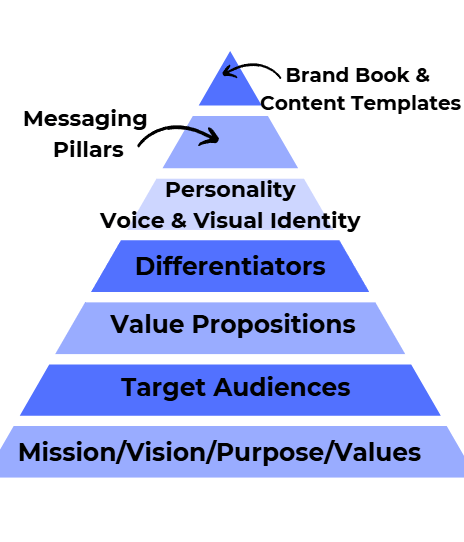
Brands anchored in mission, values, and purpose and reinforced through disciplined, consistent messaging, strengthen stakeholder confidence in your organization’s authenticity, impact, and stewardship.
A Clear Brand Helps People Understand How Your Nonprofit Really Works
Government funding is complex.
Policy environments change.
Budget decisions are influenced by forces far beyond any one nonprofit’s control.
Nonprofit leaders can’t eliminate this complexity, but you can communicate it clearly. It’s time to pull back the curtain.
Nonprofits with clear brand positioning are better able to:
- Explain how funding sources support specific outcomes.
- Demonstrate the ripple effects of funding reductions.
- Reinforce why diversified revenue matters.
- Help donors understand the role their giving plays.
- Maintain confidence during periods of uncertainty.
- Keep internal and external stakeholders aligned.
Clear positioning helps your supporters understand and remember why your organization exists and why it’s relevant to their lives and community, even when external funding or policies change.
Credibility Comes From Consistency
Nonprofit public brand perception is shaped over time through repeated experiences. However,
- If your messaging changes frequently…
- If departments describe your mission in different ways…
- If impact stories feel vague or generic…
- If decision-making seems reactive instead of strategic…
Supporter trust erodes. Community members don’t understand your impact. Policy leaders overlook your mission.
On the other hand, consistent strategic positioning and core messaging strengthen stakeholder perception and recognition.
- Consistency signals strategic direction.
- It signals discipline and sector leadership.
- It demonstrates that your organization knows who you are and where you’re going.
These signals matter. Organizations with clear messaging frameworks and disciplined brand execution are better positioned to maintain trust through volatility, uncertainty, and sector upheaval.
Transparency Is a Brand Strategy, Not a Compliance Exercise
Many nonprofits publish annual reports or financial statements. But, transparency is most powerful when it’s integrated into the brand itself.
This means:
- Regularly explaining how programs are funded.
- Showing real outcomes and human stories.
- Acknowledging challenges and learning moments.
- Clarifying the role of overhead and infrastructure.
- Demonstrating long-term impact, not just activity.
Organizations that clearly communicate the realities they are facing, and how they are addressing them while staying anchored in mission and purpose, are far more likely to foster community trust and sustain meaningful engagement.
Transparency, when done well, becomes a defining brand characteristic.
Emotional Connection Strengthens Resilience
Facts alone rarely change perception. People decide whether to trust an organization based on how they feel about it.
Your brand can create emotional connections by:
- Showing real people/programs affected by policy decisions.
- Communicating your mission and purpose with confidence and clarity.
- Inviting supporters into your story of impact with actionable asks.
- Reinforcing shared values both externally and internally.
When stakeholders feel connected, they’re more willing to:
- Seek accurate information.
- Defend the organization publicly.
- Continue supporting your mission during uncertain times.
- Advocate for you within their own networks.
In this way, your brand becomes a valuable protective asset.
Brand Clarity Helps Organizations Lead, Not React
The Candid article serves as an important reminder: nonprofit public brand perception doesn’t automatically keep pace with operational realities.
In moments like these, organizations with unclear brands often react defensively.
Organizations with strong brands respond differently.
They:
- Proactively educate stakeholders.
- Communicate impact with confidence.
- Reinforce their purpose and relevance.
- Maintain donor and volunteer trust.
- Navigate funding volatility more effectively.
Brand clarity won’t completely eliminate community misperceptions.
But it will reduce their power.
It gives nonprofits a stable platform from which to lead conversations rather than chase them.

Fundraising Alone Is Not the Long-Term Solution
When public misunderstanding about nonprofit funding surfaces, the instinct is often to double down on fundraising. While that may stabilize revenue in the short term, it doesn’t solve the underlying issue — how clearly your organization is understood and valued.
The better approach is to thoughtfully build and communicate a stronger brand foundation.
When your mission, messaging, positioning, and storytelling are aligned, people are far more likely to:
- Understand your work.
- Trust your stewardship.
- Believe in your long-term impact.
- Engage with your programs.
- Stay committed even when headlines are uncertain.
Nonprofit public brand perception is shaped every day, not just by news cycles, but by the clarity of the stories nonprofits tell (or don’t tell).
Your brand is the lens through which those stories are understood.
And in today’s environment, that lens matters more than ever.
Moments of Uncertainty Can Also be Moments of Growth
Funding disruptions and perception challenges can feel destabilizing. But they can also be an invitation to step back and strengthen the strategic foundation of your brand.
If this article raised questions about how your organization is perceived, my Brand Clarity Self-Assessment is a helpful place to begin. It’ll help you identify gaps in messaging, positioning, and stakeholder understanding.
👉 Download the assessment today.
👉 Or schedule a discovery call with me to talk through your organization’s current challenges and opportunities. Together, we can explore practical ways to strengthen trust, alignment, and long-term resilience.
