
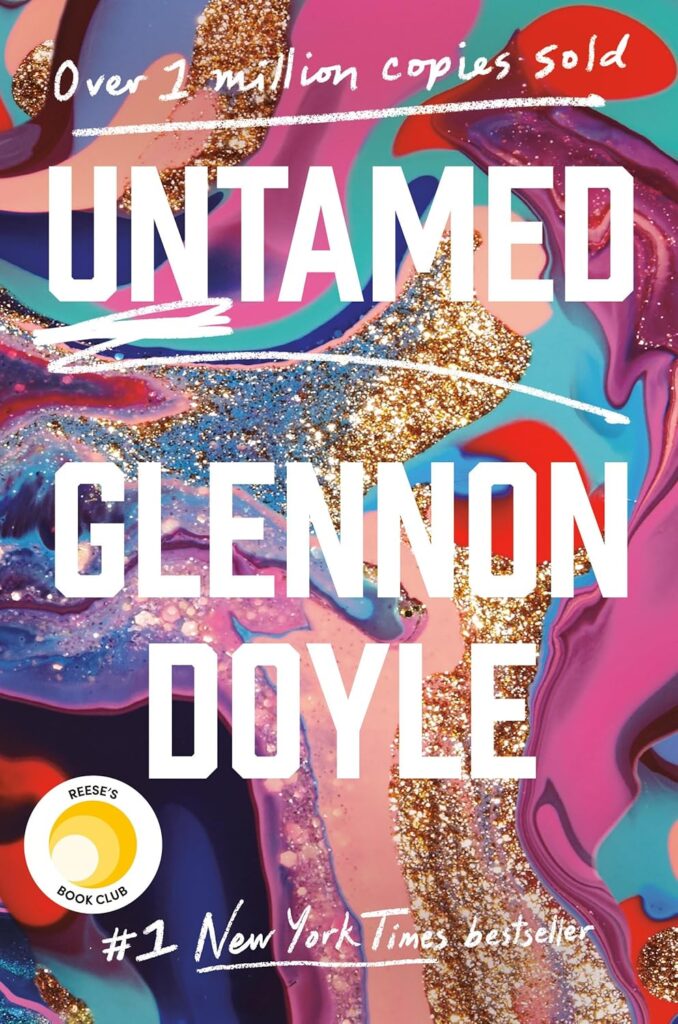
I’m late to discovering Untamed by Glennon Doyle, and I’m very sorry about that. Not in a cultural how-did-I-miss-this way, but in a more personal one. This book spoke to me as if it had been waiting patiently for me to be ready to hear it.
The Lie We Learn About Life Being Easy
There is a line in Untamed that keeps echoing in my head:
“The truest, most beautiful life never promises to be an easy one. We need to let go of the lie that it’s supposed to be.”
This book didn’t just resonate with where I am now; it also resonated with where I was. It helped me trace the story back to its beginning.
The Year I Learned to Be Good
I was ten.
Ten was the year something happened to me and my family that taught me that the world could turn dangerous without warning. I don’t remember consciously deciding anything that day, but I do remember being profoundly changed. I thought that my natural tendencies to be emotional, sensitive, thoughtful, and questioning were the reason this bad thing happened to us. God was mad at me. I thought that if I could just be perfect, a good girl, a quiet girl, a devout girl, then maybe nothing bad would happen again. I thought that being “good” would be a shield.
Reading Untamed decades later, I realized how deeply that lesson landed and how long I’ve been carrying it.
The Taming Process: When Children Learn to Abandon Themselves
Glennon Doyle writes about what she calls the taming process: the moment children begin to trade their instincts for approval, their inner knowing for external rules. She argues that around age ten, many of us learn to abandon ourselves in exchange for safety, belonging, or praise. We learn how to be “good girls” and “strong boys.” We learn which parts of ourselves are acceptable and which should stay hidden.
I didn’t just recognize that idea intellectually. I recognized it viscerally.
When Perfection Becomes Protection
Ten wasn’t an abstract developmental milestone for me. It was the year I decided that perfection was protection.
And once you believe that, it’s very hard to unlearn.
Why Being “Good” Is Often Fear in Disguise
One of the most insightful realizations Untamed offers is that being “good” is often fear in disguise. Fear of disappointing. Fear of conflict. Fear of being too much or not enough or both. Fear of what might happen if we stop performing the version of ourselves that the world (including parents, friends, teachers, neighbors, and more) seems to reward.
I have spent a lot of my life trying to be good in ways that look admirable from the outside. Responsible. Successful. Reliable. The one who holds it together. The one who doesn’t rock the boat. The one who always goes above and beyond.
Living on High Alert Instead of Living From the Inside Out
But the problem with living that way is that it doesn’t feel like living from the inside out. It feels like living on high alert.
But Untamed no-so-gently—and sometimes uncomfortably—asks different questions:
“What if pain isn’t something to avoid at all costs?
What if avoiding pain is actually what keeps us trapped?
“What if pain is not tragic? Pain is magic.”
Letting Old Expectations Burn
One of Doyle’s most challenging ideas is her insistence that freedom requires letting old mindsets and expectations burn. She argues that many of the systems we cling to, like relationships, roles, identities, and rules, exist not because they serve us, but because we’re afraid of what will happen if we let them go.
Fear as a Tool of Taming
Fear, she says, is a tool of taming. It teaches us to distrust ourselves. To stay small. To obey the invisible rules of the cage.
I felt deeply seen by that idea.
Because I have spent years managing fear by making myself more palatable, more available, more prepared, more controlled. I tried—literally and figuratively—to make myself smaller in every way. And while that strategy may have kept me functional, it also kept me tired. And stuck.
Redefining Brave: Living From the Inside Out
Untamed doesn’t promise that listening to myself will make life easier. In fact, it promises the opposite. Brave, Doyle insists, means living from the inside out. Brave means turning inward in uncertain moments, feeling for the Knowing, and speaking it out loud—even when your voice shakes.
That definition of bravery is quieter than the one we’re usually given. It’s not about fearlessness. It’s about honesty.
“Suffering is what happens when we avoid pain and consequently miss our own becoming.”
“We Can Do Hard Things” Is a Call to Action
The phrase Doyle returns to again and again—We can do hard things—has become something of a cultural mantra. But in the context of Untamed, it isn’t motivational fluff. It’s a call to action.
It means: I see my fear. I respect it. And I don’t let it make my decisions.
For someone who learned early that being “good” might keep the world from falling apart, this is radical work. It requires unlearning the idea that safety comes from compliance. It requires trusting that even if something breaks–if someone is disappointed, if something ends, if I am misunderstood–I will survive.
Doyle writes, “When a woman finally learns that pleasing the world is impossible, she becomes free to learn how to please herself.”
Learning to Trust Myself Again
That sentence is both a relief and a reckoning. I already know, rationally, that pleasing everyone is impossible. And yet my nervous system still hasn’t gotten the memo.
Fear doesn’t always show up for me as panic or chaos. Sometimes it looks like over-functioning. Perfectionism. The expectation of more. The belief that if I just try harder, do better, do more, I can prevent pain.
That’s the part I’m still practicing.
Returning to Who I Was Before I Was Tamed
Because ten-year-old me is still in here, still whispering that bad things happen when you step out of line. Untamed didn’t erase that voice. But it gave me another one to listen to alongside it.
The one that says:
You don’t need to be perfect to be okay.
You don’t need to be good to be worthy.
You don’t need to earn your right to exist.
What stays with me most from Untamed is the invitation it extends. Doyle urges readers to rediscover who they were before they were told who to be. Before the taming. Before the rules hardened into identity.
Like many trauma survivors, I don’t remember much from before it happened—including who I was before ten. But I’m learning how to listen to her now. In moments of discomfort. In moments of desire. In moments when something inside me says yes or no before I can explain why.
Maybe the truest, most beautiful life is not easy—but, as Untamed insists, it is honest, and that honesty is the key message I carry forward.
But it is honest. And I am learning that honesty is safer than the cage ever was.
I’m always interested in hearing what other book lovers are reading. Want to talk about the latest book you’ve read? Contact me!
